Feed your mind. Protect your body
My Journey
“I started out as a kid with less than average skill, but through curiosity and perseverance, and with the great teachers, I am living my dream of improving myself through martial arts.”
– RICHARD HAYE
Gaining knowledge
Karate
The Beginning of a Lifelong Journey
I’ve always dreamed of dedicating my life to martial arts. Growing up in Cape Town, South Africa, I could see right into a karate studio from my grandmother’s bedroom window. Every evening, I’d sit there, captivated by the idea of training, but we didn’t have the money for lessons.
When my family moved to Norway in 1982, I finally got my chance. I started Karate in Oslo as soon as I could, but it only lasted six months before the training became too challenging, and I quit. We soon moved to Kristiansand, and those early years were difficult. Struggling with a new language, I faced bullying and fights at school almost daily. In 1984 or 1985, I saw The Karate Kid and immediately felt a powerful connection. Shortly after, I attended a demonstration by Gunnar Nordahl, head of the Kristiansand Karate Club. Watching him splinter batons with powerful kicks and effortlessly fend off multiple black belts was the most incredible thing I had ever seen. I knew then that I had to try it again.
Karate quickly became my first love, setting the foundation for my martial arts journey. Starting with Shorin Ryu, I found strength in its structure, discipline, and fundamental techniques, as well as a supportive community that helped me grow and integrate. These principles anchored my training, instilling the values of persistence and respect. In time, my dedication led me to earn my first black belt, a milestone that remains vividly etched in my memory.
A Life-Changing Journey to Japan
In 2000, another dream came true when I traveled to Japan to deepen my understanding of Shorin Ryu Karate. By then, I held a 3rd Dan black belt, and my goal was to train with Sensei Shigenobu Nakano, the master whose signature graced all of our black belt diplomas. I had the unique privilege of spending time with Nakano and his wife, discussing the meaning and philosophy behind various Karate styles. His style, formally named Shorin Ryu Ken Shin Kai, held deep personal significance for him.
KEN SHIN KAI is written in Japanese using the characters for ‘sword’ (剣), ‘spirit’ (心), and ‘group’ (会), roughly translating to “the group for training the spirit through using the sword.” This idea of training the mind and spirit through martial arts had a profound impact on me. It inspired what would become my mantra, Feed Your Mind, Protect Your Body. The concept of Ken Shin Kai taught me that mental and psychological growth should be as central to martial arts as physical strength and technique. Out of respect for Sensei Nakano, I have chosen to bear his logo in all Karate contexts.
Until Nakano’s passing in 2013, we were among the few from Norway who visited and trained with him . This short experience transformed my understanding of Karate, helping me see that the Karate I practiced—which I had believed was steeped in tradition—was itself an evolution of the original art, as is the case with all martial arts styles. This realization freed me from rigid interpretations and encouraged me to approach Karate and martial arts as a whole with a more open and adaptive mindset.
Feed Your Mind, Protect Your Body
The mantra Feed Your Mind, Protect Your Body grew directly out of the teachings of Ken Shin Kai. It’s more than just a slogan; it represents my commitment to the mental and psychological aspects of martial arts. My vision is that training should strengthen the mind and spirit just as much as it builds physical skill. This mantra is a reminder of the importance of focus, setting goals, and fostering personal growth, both on and off the mat. Through this approach, I aim to help students develop self-confidence, resilience, and a strong sense of self
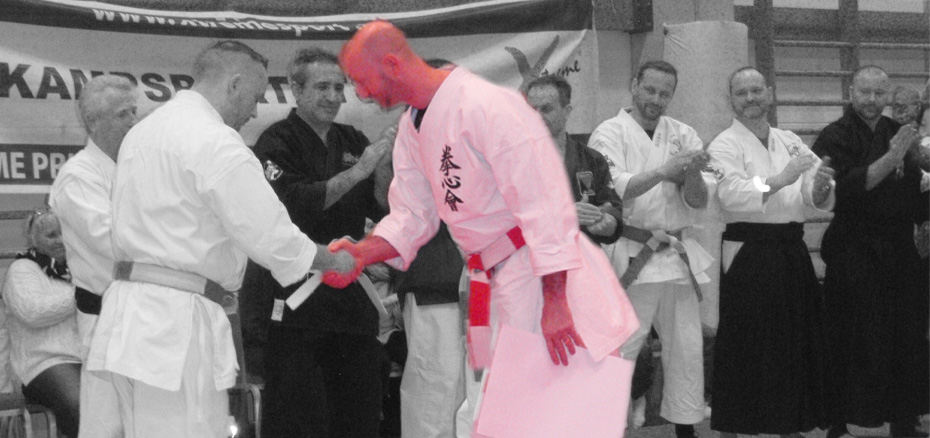
Today, Karate remains a vital part of who I am, influencing every aspect of my life and teaching.
I’m grateful for the opportunity to share this journey through seminars, classes, and personal mentorship, passing on the values and principles that have shaped me.
While I no longer train Karate in the same format as before, and my journey has expanded beyond traditional katas and kiais, I hold deep respect for this formative part of my life. If you’re a Karate practitioner seeking fresh perspectives and growth, I would be honored to bring my insights to your school or camp, offering a seminar experience that both challenges and inspires.
Gaining knowledge
Filipino, Southeast Asian Martial Art & JKD
My martial arts journey has always been about growth and transformation. Filipino and Southeast Asian Martial Arts fundamentally reshaped my approach in 1995, when I attended a camp in Mandal with Johan Skålberg and Jeff Espinous. Until then, I had associated Arnis/Kali solely with stick fighting and hadn’t fully grasped its potential. But watching Jeff apply Kali techniques empty-handed was eye-opening, revealing the versatility and adaptability of the art. Although the FMA community in Norway was small, this newfound passion led me to travel extensively, attending up to 14 seminars a year and dedicating thousands of hours to training.
Where Japanese martial arts had instilled structure and discipline, Kali introduced me to a form of organized chaos—a completely new way of thinking and moving. Initially, I tried to merge Kali with Karate but quickly realized that I wasn’t yet skilled enough in either to create a coherent blend. Recognizing the need for a fresh start, I founded Kristiansand Kampsport Club in 1997, providing a dedicated space to explore FMA alongside Karate. This club eventually grew into Kristiansand Kampsport Senter, laying the foundation for the center we have today.
Expanding Horizons
Around this time, I began to delve into Western kickboxing. Through Jeff Espinous, I encountered Filipino kickboxing (Sikaran), Savate, and Muay Thai, connecting with Profight Kickboxing under Anders Blomberg and IMB Kickboxing under Richard Bustillo. Bustillo encouraged me to travel to Thailand to deepen my understanding of Muay Thai, leading to annual training trips starting in 2004 with an exceptional instructor, Vicharn Krumkratok. These Thailand journeys became a tradition, with students from my school joining each year to immerse themselves in Muay Thai. This continued up to twice a year until 2011.
A Transformative Mentorship
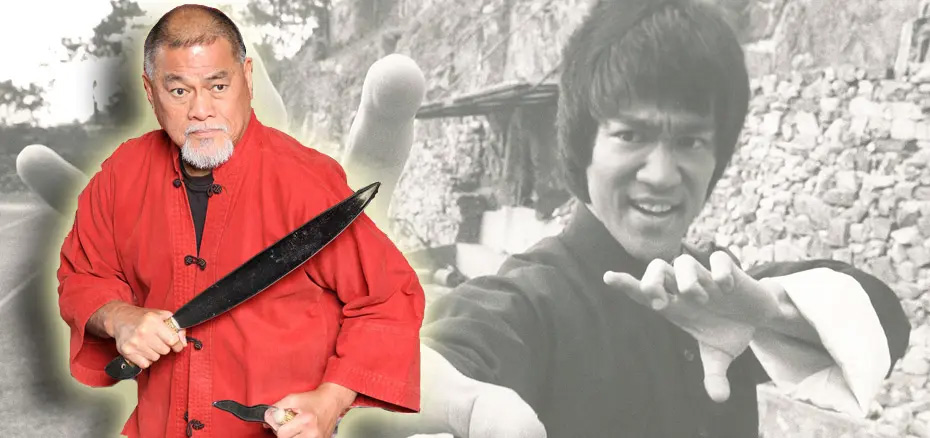
In 2001, at Jeff´s IKAEF summer camp, I met Andy Gibney, a British instructor teaching Jeet Kune Do. This connection led to an introduction to Sifu Richard Bustillo, one of Bruce Lee’s original students. After attending a few seminars, I had the privilege of becoming Bustillo’s student in 2003, a mentorship that continued until his passing in 2017. Our friendship deepened over time, and after sharing accommodations at various seminars, I invited Bustillo to Norway for the first time in 2005. This visit marked the beginning of a long-term mentorship, during which Bustillo imparted invaluable wisdom that has stayed with me ever since. He would often say, “If you don’t know it, learn it before you speak about it. Always dare to start from scratch and embrace what it feels like to be a beginner again. The true growth happens outside your comfort zone, where you must let go of your ego.”
With Bustillo’s guidance and his emphasis on adaptability and humility, I was able to develop Kali Self Defence (KSD). Inspired by Bruce Lee’s Jeet Kune Do principles of “using no way as way” and “having no limitation as limitation,” KSD is more than a set of techniques—it’s a mindset. KSD integrates a wide range of influences, including Kali Sikaran, Cacoy Doce Pares, Muay Thai, Brazilian Jiu-Jitsu, and Karate, creating a comprehensive, adaptable self-defense system.
Kali Self Defence: My Personal Expression of Jeet Kune Do
Just as Jeet Kune Do is not a “style” but a philosophy, Kali Self Defence embodies an adaptable approach to martial arts. KSD is rooted in Bruce Lee’s core principle of “taking what is useful and discarding what is not,” encouraging each practitioner to forge a path that reflects their own strengths, creativity, and unique qualities. This dynamic approach allows students to adapt techniques to real-world situations while preserving the essence of traditional knowledge.
Sharing the Journey
As a martial artist, I am grateful to follow in the footsteps of mentors like Richard Bustillo, who taught me the importance of adaptability, humility, and continuous learning. Whether you’re a martial artist seeking to broaden your perspective or looking to introduce KSD to your camp or event, I would be honored to share the insights, philosophies, and techniques that have shaped my journey.
Gaining knowledge
Brazilian Jiu Jitsu
Humility, Resilience, and Growth
Like every martial artist training in the ’90s, I heard about the UFC long before the internet could bring it to life. I read about the Gracies in Black Belt Magazine and managed to get my hands on a VHS tape of UFC 1, where Royce Gracie won the tournament using Brazilian Jiu Jitsu. Curious, I confronted my Karate instructors, only to be told it was a hoax—nothing, they claimed, could surpass the strength of Karate. I believed them, and for years, that belief held.
In the early 2000s, however, my curiosity grew, and I attended every grappling seminar I could find, from Shootfighting to Luta Livre and BJJ. I even traveled to Switzerland to train with Richard Liborio. But at that time, grappling and the Vale Tudo approach didn’t resonate with me, and I remained skeptical—still believing that a solid punch to the face was superior to any ground techniques. I returned my full focus back to Karate, Kali and Kickboxing for the next few years.
Then in 2009, a humbling moment changed everything. A guest in our academy, a 16-year-old girl, a two-stripe white belt, offered to roll with me. With multiple black belts in standing arts and over twenty-five years of experience, I thought I had the upper hand. She proved me wrong, dominating me effortlessly and delivering an ego check that I wasn’t prepared for. I realized that I had a glaring hole in my martial arts knowledge, and I could either ignore it or do something about it.
Starting Over at 40
At 40, the idea of starting anew was both exhilarating and daunting, rekindling the excitement I’d felt as a young martial artist. With no BJJ schools in Kristiansand, I gathered a small group of students, and we began our own “ground version” of Fight Club. After weeks of inefficient training, I discovered Roy Dean’s Blue Belt Requirements. His structured approach instantly resonated with me, providing the foundation I was seeking. In 2009/10, I donned a white belt, and with a group of 5-6 dedicated students, we began training BJJ basics.
Wanting to learn more, I reached out to Marcelo “Yougi” Santiago in Sweden, Scandinavia’s highest-ranked BJJ instructor at the time. Despite my limited knowledge, he welcomed us under his wing and visited us several times a year. Even with Marcelo’s help, I found myself returning to Roy Dean’s curriculum, which offered a structure that was missing elsewhere. In 2016, I invited Roy Dean to Norway for a seminar, feeling an immediate connection to his approach. I invited him back again that same year, eager to learn more from him.
Following the same learning approach I had in Karate and Kali, I traveled to seminars, invited instructors, and trained with anyone who taught BJJ, both locally and abroad, accumulating countless hours on the mat.
Becoming Part of the Roy Dean Academy
In 2018, we officially joined the Roy Dean Academy. Roy’s multidisciplinary approach to martial arts aligned perfectly with our philosophy at Kristiansand Kampsport Senter, where we value structured, purposeful learning. His academy provided a clear curriculum that fit our vision, and we began to build a more defined BJJ program.
In late 2019, after months of preparation under Roy’s guidance, I completed my brown belt demo, which was posted on YouTube as part of his select series. Being promoted to brown belt was an incredible milestone, one that deepened my commitment to BJJ.
Then came the pandemic. With time to train in a small, focused group, I put in more hours on the mat than ever before. At 50 years old, I found myself training nearly every day, refining my skills and embracing the art of Jiu Jitsu with renewed dedication.
The Path to Black Belt
When things returned to normal, Roy came back to Norway to assess my progress. Although black belt was still a few years away, in 2023, Roy gave me a date and a year to prepare. I knew I needed to be physically ready, so I started hitting the weights, improving my diet, and training more intensively than ever. I incorporated swimming, weightlifting, and extra mat time, dedicating myself solely to BJJ in the final months before the demo.
Just days before the scheduled demo, however, an unexpected event occurred. While covering a kickboxing class, I tore my hamstring, threatening all of my preparations. Determined to go ahead, I consulted two specialists, both advising against it. Roy also felt it was too risky, and we postponed. While I was disappointed, I’d put in the work, and during the seminar, Roy awarded me my black belt anyway. It wasn’t the way I’d envisioned the black belt demo, but I was deeply honored and humbled to be promoted as the first Roy Dean black belt in Europe.
Honoring the Journey
Receiving my black belt in Brazilian Jiu Jitsu has been one of the most fulfilling achievements of my life. This journey has taught me humility, resilience, and the value of being a lifelong student. I am honored to represent Professor Dean and the legacy he carries forward. Now, as a black belt, I look forward to helping others discover the beauty and depth of Jiu Jitsu, sharing the art’s powerful lessons with those ready to take the journey.
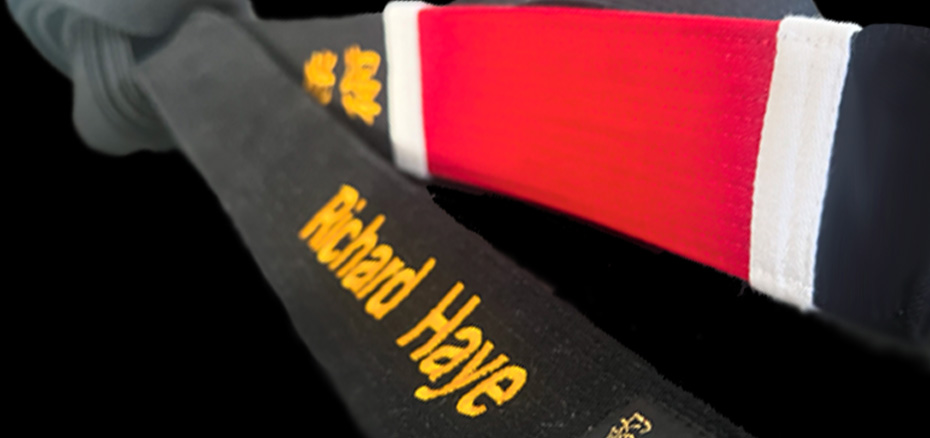
Do not be blinded by
belts and titles.
They aren’t meant to impress but to inspire you to chase your own dreams. These ranks don’t define my abilities as a practitioner, instructor, or person. Instead, judge me by what I deliver on and off the mat every day. Belts and degrees reflect years of dedication and meeting the grading standards of my instructors, who believed I had earned them at that time.
On the mat.
Brazilian Jiu Jitsu
Black Belt | Roy Dean | 2024
Karate
6. Dan Karate |Norwegian Martial Arts Association | 2016
Filipino Martial Arts
Punong Guro 7. Dan Kali Self Defence | Richard Bustillo | 2016
6. Dan. Cacoy Doce Pares | Cacoy Canete | 2016
Katalungan Guro. Kali Sikaran | Jeff Espinous & Johan Skålberg | 2007
Kickboxing
5. Degree | Richard Bustillo | 2016
Krav Maga
Black Belt | Raffi Liven | 2003
Off the mat.
University of Agder
Individual & Team Coaching| 2009
University of Agder
PPU |Post Graduate Certificate in Education | 2003-2004
Noroff Kristiansand
Multimedia and Graphic Design | 2001-2003
IT Akademiet Kristiansand
Web Design & Development | 2000-2001
Restaurant Bakgården
Chef’s Certificate | 1989
Kristiansand Kokkeskole
Culinary school | 1986-1988
Turning Adversity into Strength
Coaching
Growing up in South Africa, I experienced a stormy and challenging childhood. It always fascinated me how two people could go through the same difficult or even traumatic events and emerge so differently—one using adversity as fuel to grow and thrive, while the other hits rock bottom. This question became the foundation of a lifelong curiosity about resilience, mindset, and personal growth.
A Lifelong Search for Answers
As a young adult, I turned to books on psychology, human behavior, and self-improvement, searching for answers to this paradox. I wanted to understand what makes the difference—the internal mechanisms that allow some people to turn pain into purpose. But it wasn’t until 2000 that my journey took a profound turn. Andy Gibney introduced me to the teachings of Tony Robbins, which opened a door to a whole new way of thinking about growth and transformation.
Life-Changing Mentorship and Seminars
I attended Tony Robbins’ “Unleash the Power Within” seminars in London twice, years apart, and spent a full year working with a personal coach. These experiences were pivotal. They didn’t just teach me about motivation—they gave me tools for self-awareness, clarity, and action. I learned the importance of focusing on what you can control, reframing challenges as opportunities, and mastering the internal dialogue that shapes your reality. Tony Robbins’ teachings reinforced the idea that the quality of your life equals the quality of your communication—with others and, most importantly, with yourself.
Applying Lessons to My Work
This foundation of coaching studies and self-development has shaped the way I approach teaching, mentoring, and helping others. Whether it’s in martial arts or personal growth coaching, I use these principles to guide people in overcoming their limitations and unlocking their potential. I’ve learned that transformation begins with asking the right questions:
- How are you communicating with yourself?
- What beliefs are holding you back?
- How can you reframe challenges to work in your favor?
These lessons allow me to connect deeply with individuals, teams, and organizations, helping them find their strength and move forward with clarity and purpose. My own journey from adversity to growth serves as a reminder that change is possible for anyone willing to do the work.
Helping Others Rise Above
Today, my mission is to share what I’ve learned with others. Whether through coaching, seminars, or martial arts instruction, I aim to inspire people to embrace their inner strength, reframe their struggles, and create meaningful, fulfilling lives. The tools I’ve gained over the past two decades aren’t just theoretical—they’re practical and deeply transformative, allowing me to help others navigate their own paths to success and resilience.
The question that fueled my journey continues to guide me in my work with others: How can we turn adversity into strength? The answer lies within each of us, and I’m here to help people discover it.
Feed your mind Protect your body
TAKE IT TO THE
NEXT LEVEL.
Contact me to discuss bringing practical, impactful martial arts instruction to your school or event. Let’s customize a seminar experience that fits your needs.